
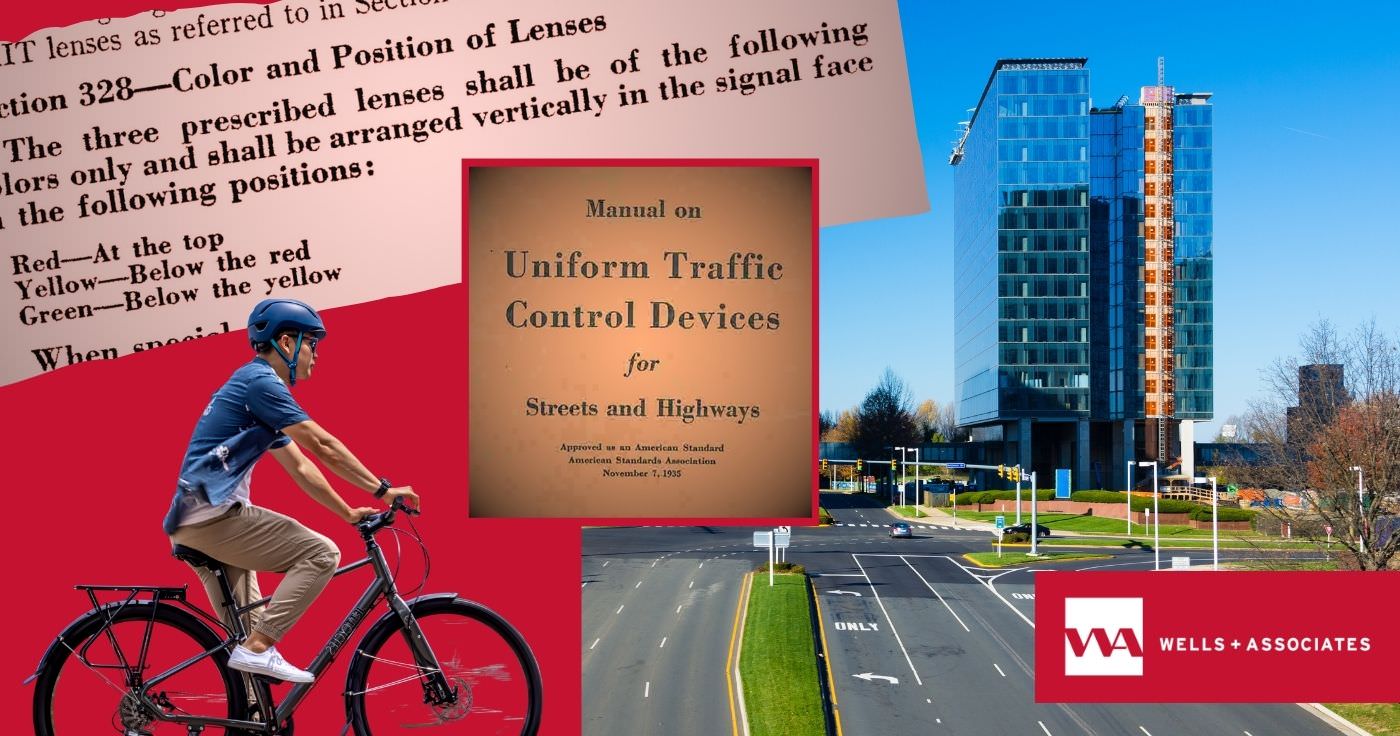
1935 was a big year in transportation. That year, the three-color traffic signal (red, yellow, green) was adopted as the standard for signal lenses, as stated in the very first edition of the Manual on Uniform Traffic Control Devices (MUTCD), which contains the national standards governing all traffic control devices.*
So what are the latest trends when it comes to traffic control devices?
In regions such as Northern Virginia that are experiencing increases in density and traffic, the 11th Edition of the MUTCD is having an impact in how suburban, fast-growing regions deal with roadway improvements, development projects, and multimodal transportation facilities.
In this article, we review a few of these transportation trends – trends which may have an impact on your own proposed development.
1. Active Transportation Is Now a More Mainstream Method of Handling Transportation
 Active transportation is non-motorized activity. Think: bicycling and walking. The MUTCD now includes comprehensive standards for active transportation facilities. Previously, active transportation standards relied more on experimental approvals or supplemental guidance. Standards now are explicitly addressed relating to facilities such as:
- Separated and/or protected bike lanes
- Bicycle signals
- Improved bicycle wayfinding and signing standards
- Protected intersections
- Two-stage turn queue boxes
- Colored bicycle pavement treatments
Facilities like these are now easier for both developers and local agencies to justify during design review due to their explicit treatment in the latest edition of the MUTCD.
2. Pedestrian Crossing Treatments Are Now Easier to Deploy
Busy, traffic-filled corridors can be found all over Northern Virginia. Roadways such as Route 7, Route 50, Route 28, Richmond Highway (US 1), Franconia-Springfield Parkway, and Prince William Parkway come to mind. With the new edition of the MUTCD, local transportation agencies now have stronger national backing for installing enhanced pedestrian crossings in places where development is fueling the demand for walking paths.
The 11th Edition elevated several pedestrian-focused traffic control devices and clarified their use. Changes in the latest edition include:
- Rectangular Rapid Flashing Beacons (RRFBs) that are now a fully recognized MUTCD treatment
- Expanded guidance related to high-visibility crosswalks
- Increased flexibility for pedestrian hybrid beacons and enhanced pedestrian crossing treatments
- Stronger emphasis on vulnerable road users
These changes have a particular relevance in high-density redevelopment districts, around Metro/transit stations, in mixed-use developments and town centers, around school zones, and in bus rapid transit (BRT) corridors.
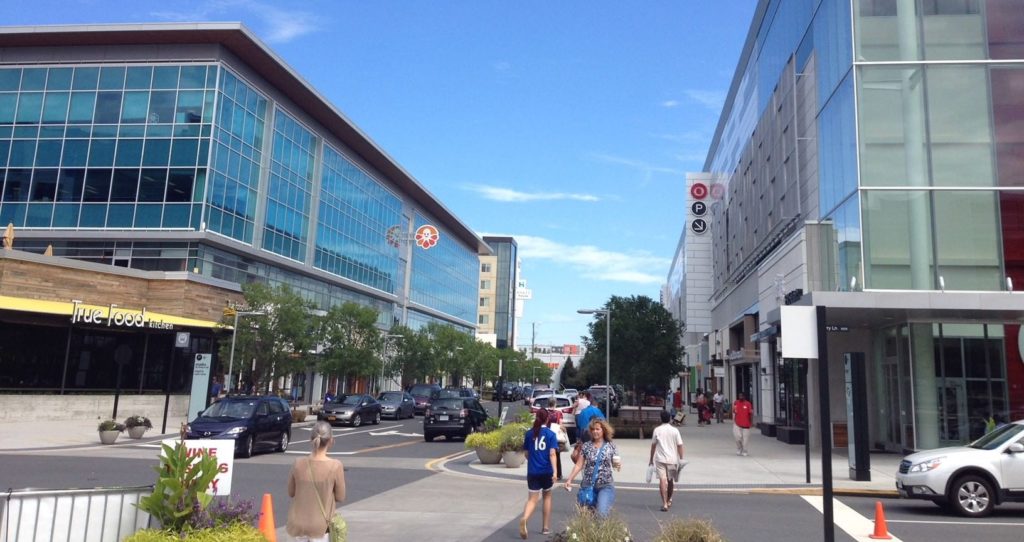
3. Multimodal Systems Are Now an Integral Part of Transportation Improvements
In support of development proposals, our work regularly involves the analysis of traffic volumes and intersection capacities. In addition to these traditional studies, the developers we work with are increasingly encountering requests to evaluate multimodal aspects such as bicycle access, pedestrian connectivity, shared-use paths, opportunities for safe crossing, and access to nearby transit.
The latest edition of the MUTCD emphasizes traffic control devices for pedestrians and bicyclists, embracing multimodalism to help jurisdictions evaluate transportation improvements.
4. Higher Expectations on Maintaining Multimodal Traffic in Work Zones in High-Growth Areas
Residents of Northern Virginia are used to nearly constant roadway, utility, transit, and development projects interrupting traffic patterns. The Virginia Work Area Protection Manual states that temporary traffic control (TTC) plans are important “in facilitating road user flow when a work zone, incident, or other event temporarily disrupts normal road user flow.” (Traffic control plans are also referred to as Maintenance of Traffic plans.)

The new MUTCD explicitly states that “a TTC zone shall be an essential part of highway construction, utility work, maintenance operations, and the management of traffic incidents.”
In practical terms, this means that the old ways of doing things are gone. For example, in the past, projects may have simply closed a sidewalk, informally routed pedestrians around a work site, or focused mainly on maintaining vehicle capacity through a site. Under the new standards, solutions might include creating:
- accessible pedestrian routes,
- ADA-compliant temporary pathways,
- safe bicycle accommodations where bike facilities exist, and/or
- clear, temporary wayfinding.
The bottom line is that many redevelopment projects in Northern Virginia occur in already-built urbanizing corridors where sidewalks cannot simply be closed without creating negative impacts for transit riders, school access, business patrons, residents, and ADA compliance.
* Now published by the Federal Highway Administration (FHWA), the 1935 edition of the MUTCD was co-published by the American Association of State Highway Officials (AASHO), now known as AASHTO, and the National Conference on Street and Highway Safety.