
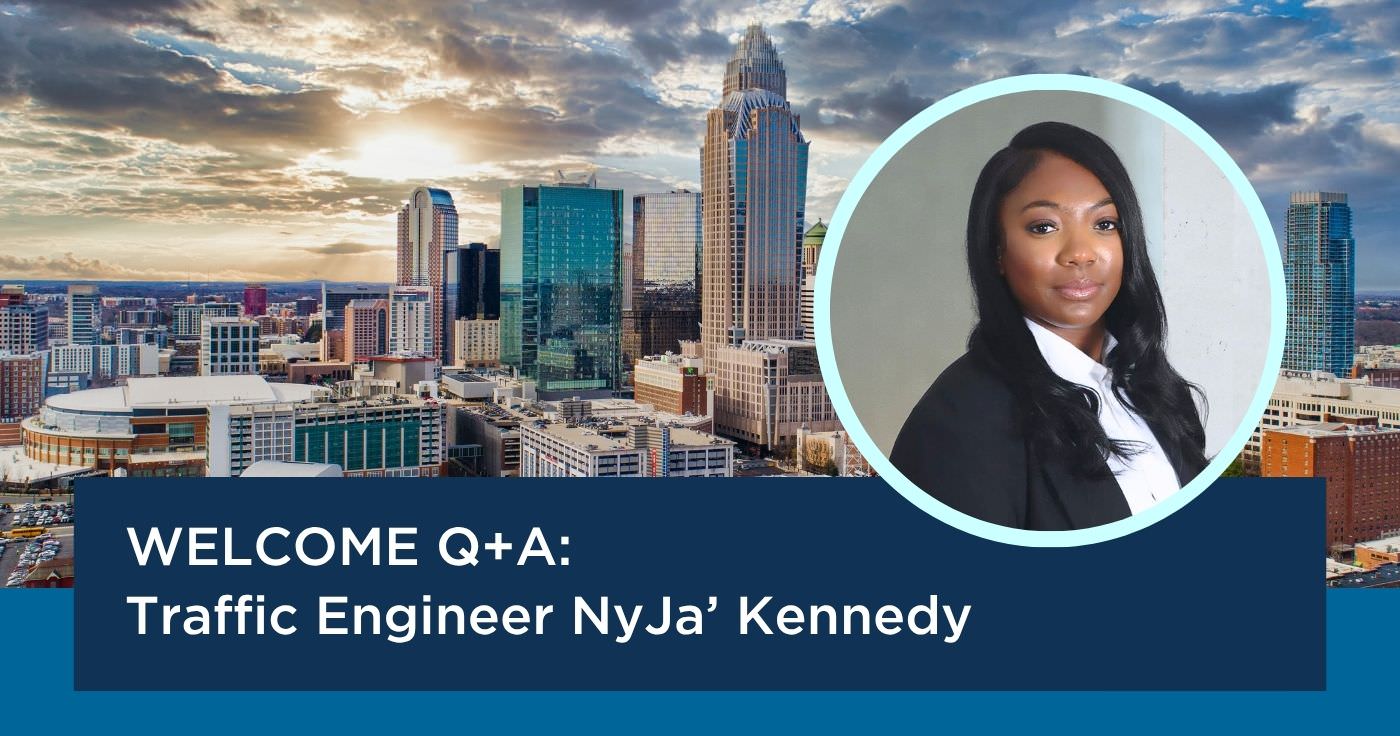
We are pleased to welcome traffic engineer NyJa’ Kennedy to our transportation engineering team. She brings experience working on traffic engineering matters, including warrant analyses, traffic signal design, pedestrian accessibility, roadway traffic flow, and lighting, not to mention experience in construction and infrastructure engineering.
Welcome to Wells + Associates, NyJa’!
Q: What initially attracted you to work in the field of transportation and traffic engineering?
Growing up in North New Jersey, I often traveled to New York City and was especially fascinated by going through the Lincoln Tunnel. As a kid, I was always curious about how massive structures like tunnels and the George Washington Bridge were built. In 8th grade, I started researching and learned that civil engineers are responsible for designing and constructing these kinds of projects. The more I explored, the more interested I became, and I eventually realized that I want to pursue a career in transportation engineering so I can design and build projects. I’m especially interested in working with roadways, focusing on the safety of the public, and seeing the real-world results of the hard work that goes into creating reliable and efficient infrastructure.
Q: NyJa’, you have diverse experience in your work as an engineer, including working for two state departments of transportation and in the private sector for a number of companies. Do any projects stand out as particularly interesting or rewarding?
One project that stood out as especially interesting and rewarding was my internship as a Transportation Aide with the Michigan Department of Transportation. During that time, I gained hands-on experience with both the design and construction aspects of major roadway projects, including the I-94 widening and the Portage Road interchange rebuild.
I had the opportunity to be directly involved in fieldwork, such as asphalt paving on Kilgore Road and Portage Road, as well as concrete paving on eastbound I-94. I also assisted with pouring a bridge deck on I-94, which gave me valuable insight into large-scale structural work. Being able to contribute to these projects and see progress firsthand made the experience both engaging and rewarding.
Q: Some of your previous project work has been on pedestrian networks and safety. Any thoughts on the importance of this aspect of transportation?
Pedestrian safety is a critical part of transportation design. While working on metro bus stop shelters in Houston, I focused on elements like proper placement, visibility, and weather protection to improve safety and accessibility. Through both field work and using MicroStation, I learned that transportation isn’t just about moving vehicles, it’s about creating safe, functional spaces for people.
Q: Has your experience in infrastructure and construction engineering influenced how you view or approach traffic engineering?
Working in infrastructure and construction has influenced how I view traffic engineering. Being in the field let me see how designs come together and how traffic control decisions affect both workers and the public day to day. It made me pay more attention to constructability, safety, and keeping plans clear and realistic.
Now I think more about how traffic moves through work zones, how drivers and pedestrians respond, and how small design choices can make things safer and run smoother.
Q: Do any trends in the Charlotte area and in the Carolinas particularly interest you?
One thing I’ve noticed in the Charlotte area and across the Carolinas is the amount of new commercial and residential development going up. With that growth comes a greater need to improve how streets handle increased traffic.
I’m interested in how projects balance traffic flow with safety, especially in busy and developing areas. With my background in construction and field work, it’s been interesting to see how these large-scale projects are planned and built to handle both current demand and future growth.